Validating or proofreading legal documents can be a time-consuming and error-prone task when done manually. To address this, the proposed AI-driven workflow automates legal citation analysis - extracting, validating, and summarizing legal references (e.g., CFR, U.S.C., and case law) from documents or URLs. This system leverages a Large Language Model (LLM) agent powered by LangChain, integrated with specialized tools and verified external data sources.
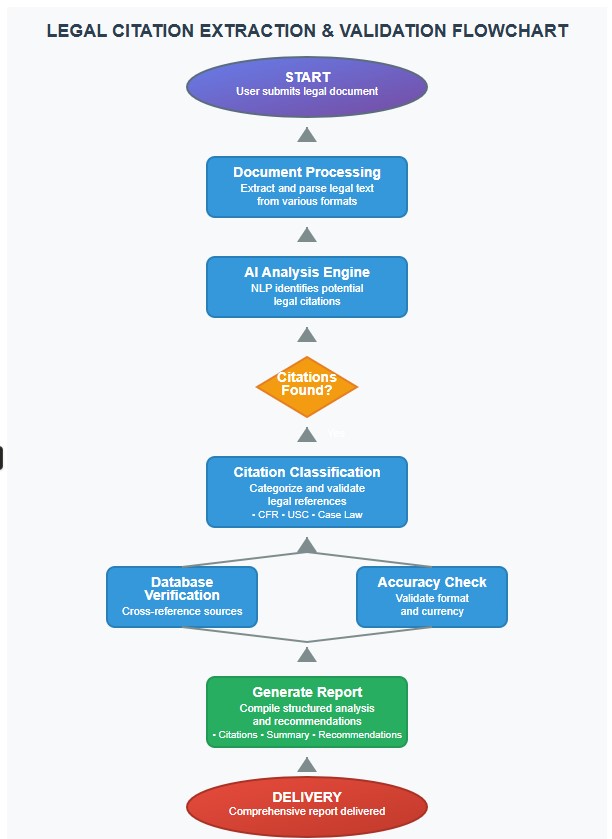
Workflow Overview
1. User Input:
A user initiates the process by submitting a message - typically a URL or legal query containing citations - through a chat interface.
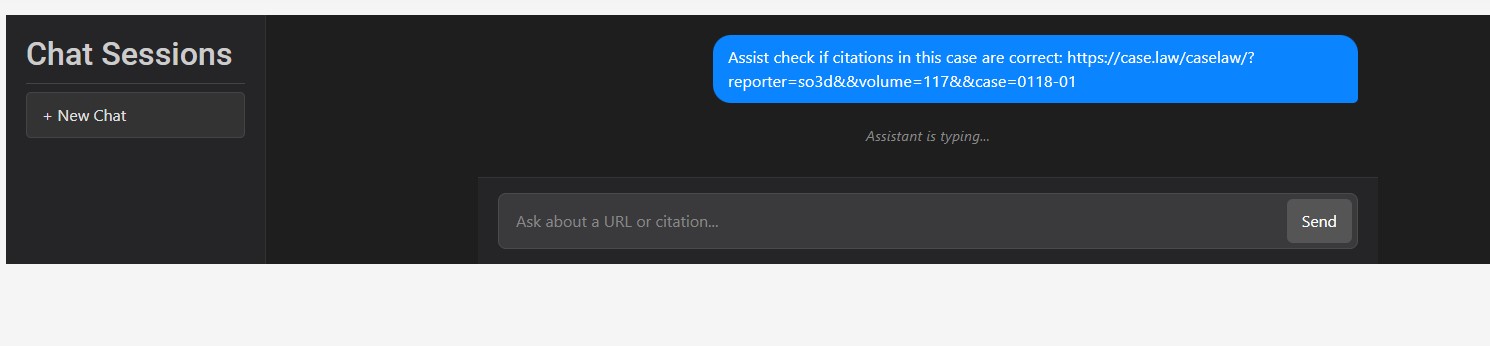
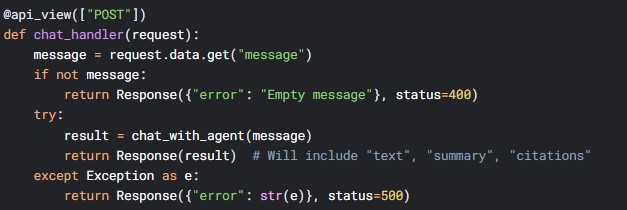
2. LLM Agent Execution (ReAct Framework):
The request is handled by a LangChain-based agent that applies the ReAct (Reasoning + Acting) paradigm. The LLM reasons about the task and determines the appropriate next step.
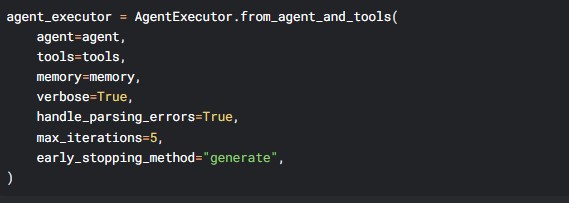
3. Tool Selection and Invocation:
If the LLM concludes that a specific action is needed (e.g., citation validation), it selects and invokes the corresponding tool from a predefined set - each equipped with engineered prompts tailored for legal analysis.
4. Iterative Processing:
The agent may continue the chain by invoking additional tools based on the outcome of previous steps until a complete analysis is achieved.
5. Response Generation:
Once all relevant actions are completed, the agent compiles a response containing the citation summary, validation results, and any relevant findings.
Future Enhancements – Vector Analysis Integration
Though not yet implemented, vector-based techniques offer powerful enhancements:
-
Context-Aware Citation Validation:
Use vector embeddings to compare the semantic content of cited text in the document with the official statute or regulation, ensuring the citation is contextually appropriate—not just syntactically valid. -
Discovery of Related Law:
After validating a citation, vector similarity searches can identify closely related cases, statutes, or sections that may not be cited explicitly but are legally relevant.
Conclusion
This workflow establishes a solid foundation for automated legal citation verification. By combining LLMs, modular toolchains, and structured reasoning, it enables accurate and scalable citation analysis. The planned integration of vector-based techniques promises even deeper insights, moving beyond surface-level validation to a more nuanced understanding of legal context and relevance.
About the Author and Firm
This analysis is provided by Kama Thuo, PLLC, an engineering & technology law firm focused on patents, AI, and wireless telecom law. Brian Kibet is a multidisciplinary professional combining expertise in wireless engineering, paralegal practice, and software development. With a background in AI and automation, he specializes in designing intelligent workflows for intellectual property processes, particularly in patent-related work. His focus is on leveraging AI to improve the speed, accuracy, and scalability of patent and trademark research, bridging the gap between technical innovation and legal strategy.
Whether you are an inventor seeking to license your technology or a company navigating an IP dispute, our firm has the technical and legal expertise to protect your interests. Reach out to us to see how we can assist you at www.kthlaw.com/patents, or explore our AI-powered legal services at https://www.kthlaw.com/ai.