Artificial intelligence (AI) has fundamentally transformed the landscape of trademark clearance and screening searches. What was once a labor-intensive, time-consuming process reliant on manual review and keyword-based database queries has evolved into a sophisticated, data-driven discipline powered by machine learning, natural language processing (NLP), and advanced pattern recognition. As global commerce accelerates and brand proliferation intensifies, AI has become a vital tool for legal professionals, businesses, and intellectual property (IP) strategists seeking to mitigate risk and ensure brand distinctiveness.
Illustration showing AI analyzing trademark databases
The Evolution of Trademark Searches
| Step | Traditional Search | AI-Powered Search |
|---|---|---|
| Search | Manual keyword queries entered one at a time into USPTO/EUIPO portals. ⏱ 4–8 hours |
Semantic and phonetic NLP scan covers exact, similar, and conceptually related marks in parallel. ⏱ < 2 minutes |
| Class mapping | Attorney manually identifies relevant classes; categories are often missed. ⏱ 2–4 hours |
AI auto-maps goods and services to all applicable Nice classes with no omissions. ⏱ < 1 minute |
| Similarity check | Case-by-case visual and phonetic comparison done by hand; subjective and inconsistent. ⏱ 3–6 hours |
Conflict-scoring engine rates every result on phonetics, appearance, and meaning with explainable scores. ⏱ < 3 minutes |
| Jurisdictions | Separate, sequential lookups per country with no cross-border correlation. ⏱ 5–10 hours |
Simultaneous sweep across USPTO, EUIPO, WIPO and 60+ national offices in one pass. ⏱ < 5 minutes |
| Report | Hand-written opinion letter compiled from scattered notes and printouts. ⏱ 2–4 hours |
Structured risk report auto-generated with ranked conflicts, citations, and recommended next steps. ⏱ < 1 minute |
| Summary | 3–5 days — total turnaround ~72% — conflict accuracy 3–5 — jurisdictions covered |
< 15 minutes — total turnaround (97% faster) ~96% — conflict accuracy (+24 %) 60+ — jurisdictions, simultaneous |
Traditionally, trademark clearance involved searching national and international trademark databases for identical or similar marks within relevant classes. These searches were often limited by rigid keyword matching and classification systems, requiring experienced attorneys to interpret results and assess likelihood of confusion. Screening searches, conducted in the early stages of brand development, were typically narrower and faster but still prone to oversight.
AI has dramatically enhanced both processes. Modern systems can now analyze not only exact matches but also phonetic similarities, semantic relationships, visual likenesses, and even conceptual associations. This shift from literal matching to contextual understanding has significantly improved the accuracy and comprehensiveness of trademark searches.
Core AI Capabilities
Picture illustrating NLP, computer vision, and predictive analytics working together
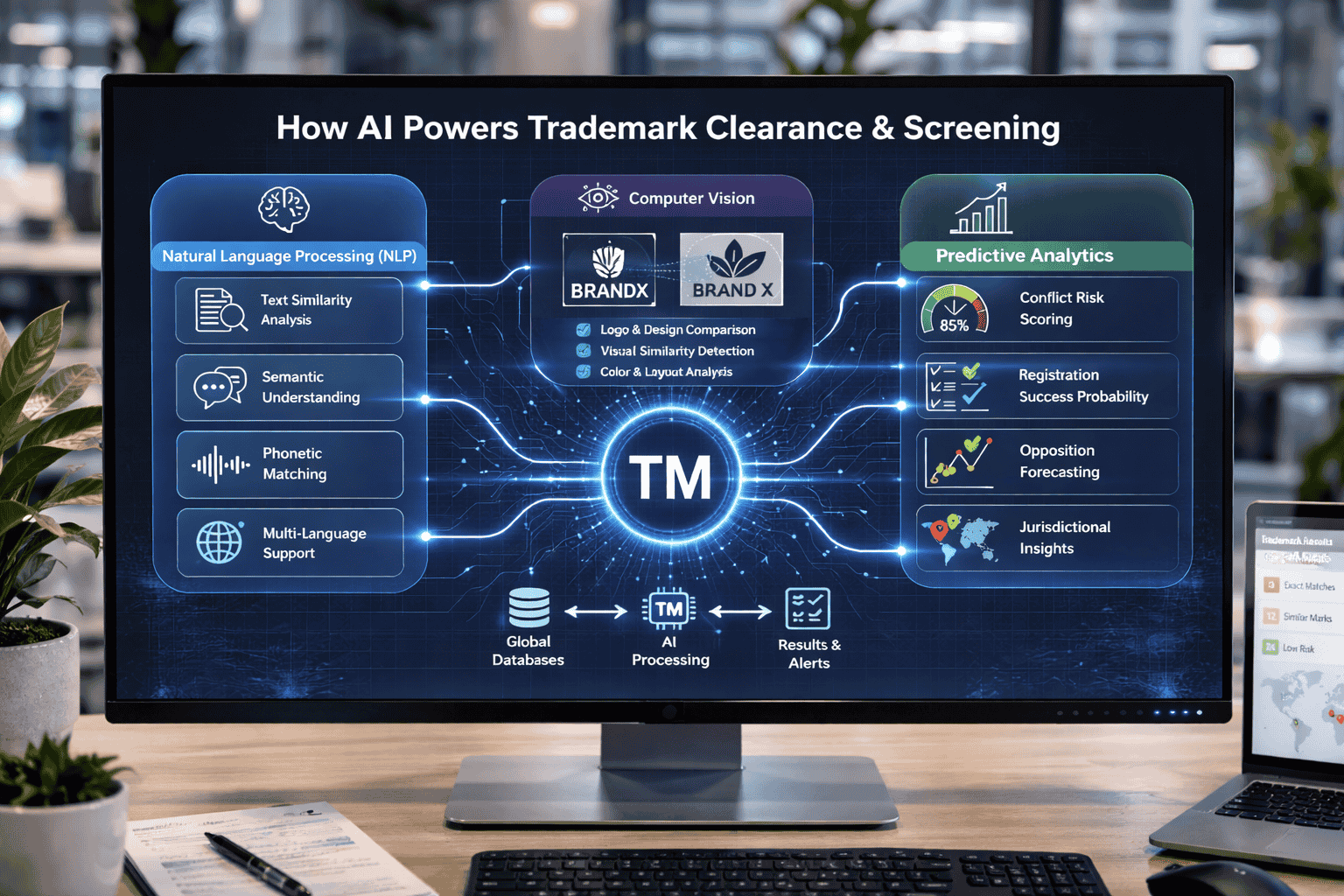
Several key AI technologies underpin the current generation of trademark search tools:
1. Natural Language Processing (NLP): NLP enables systems to understand the meaning and context of words, allowing for more intelligent comparisons between trademarks. For example, AI can recognize that two marks with different wording may convey similar commercial impressions.
2. Computer Vision: AI models trained on image datasets can evaluate logos and design marks, identifying visual similarities that might not be apparent through textual descriptions alone. This is particularly valuable for industries where branding relies heavily on visual identity.
3. Phonetic and Linguistic Analysis: AI can assess how marks sound across different languages and dialects, an essential feature in a globalized marketplace. This helps identify potential conflicts that might arise in international filings.
4. Predictive Analytics: By analyzing historical trademark decisions, AI can estimate the likelihood of registration success or opposition. This allows businesses to make more informed decisions before investing in branding and legal filings.
5. Cross-Jurisdictional Integration: Modern AI tools aggregate data from multiple jurisdictions, including trademark offices, domain name registries, social media platforms, and common law sources. This provides a holistic view of potential conflicts beyond registered marks.
Benefits for Legal Professionals and Businesses
Dashboard illustration of real-time trademark monitoring alerts
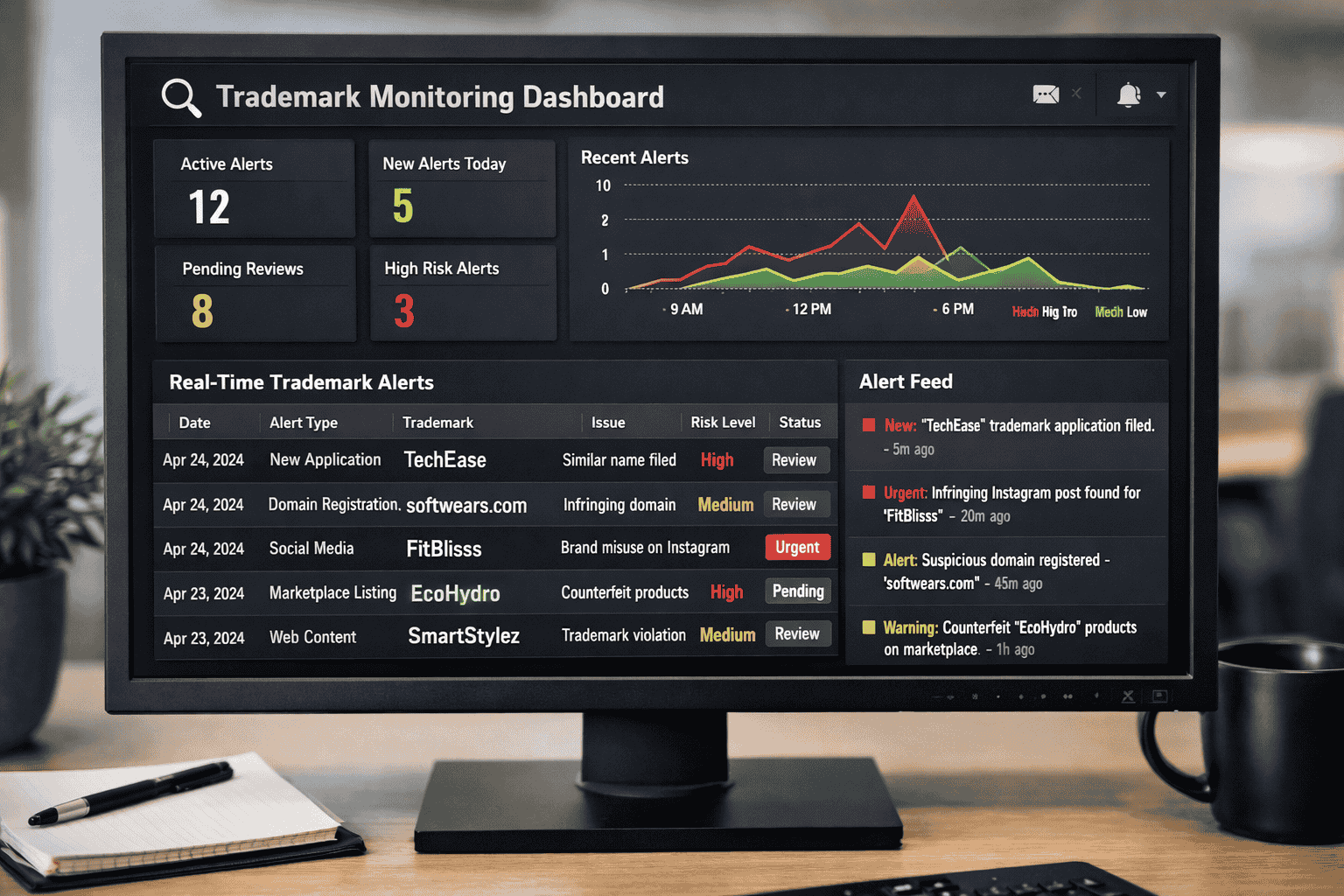
The integration of AI into trademark clearance and screening offers numerous advantages:
- Efficiency: Searches that once took days can now be completed in minutes, freeing up legal professionals to focus on strategic analysis rather than data gathering.
- Improved Accuracy: AI reduces the risk of human error and uncovers non-obvious similarities that might otherwise be missed.
- Cost Reduction: Automated processes lower the cost of conducting comprehensive searches, making them more accessible to startups and small businesses.
- Scalability: Companies managing large trademark portfolios can monitor and screen new marks continuously, ensuring ongoing protection.
Challenges and Limitations
“Black box” AI showing hidden decision-making and uncertainty

Despite its advantages, AI in trademark searching is not without challenges. One of the primary concerns is the “black box” nature of some machine learning models, which can make it difficult to explain how certain conclusions are reached. This lack of transparency can be problematic in legal contexts where reasoning must be clearly articulated.
Additionally, AI systems are only as good as the data they are trained on. Incomplete or biased datasets can lead to inaccurate results. For example, underrepresentation of certain languages or regions may reduce the effectiveness of searches in those areas.
Another limitation is that AI cannot fully replace human judgment. The legal standard for likelihood of confusion involves nuanced considerations, including consumer perception and market context, which still require expert interpretation. As a result, AI is best viewed as an augmentation tool rather than a replacement for trademark attorneys.
Ethical and Regulatory Considerations
Scales of justice balanced with AI circuitry
As AI becomes more integrated into legal workflows, questions around ethics and regulation have come to the forefront. Issues such as data privacy, algorithmic bias, and accountability must be carefully managed. Regulatory bodies in various jurisdictions are beginning to establish guidelines for the use of AI in legal practice, emphasizing transparency, fairness, and human oversight.
There is also an ongoing debate about the extent to which AI-generated insights can be relied upon in legal proceedings. While AI can provide valuable guidance, ultimate responsibility remains with the legal professionals.
The Future of Trademark Searches
AI generating brand names with instant clearance indicators
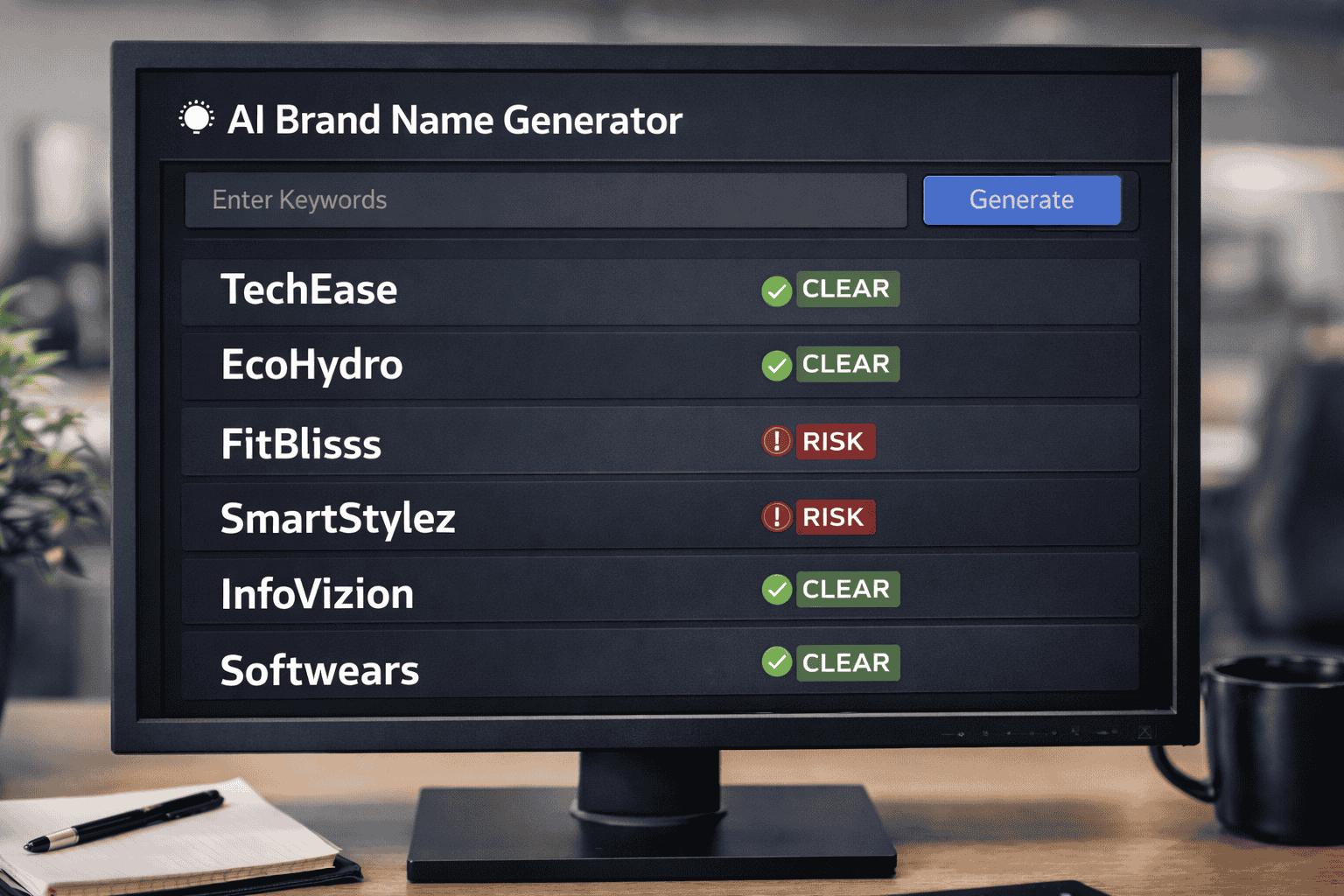
Looking ahead, the role of AI in trademark clearance and screening is expected to expand even further. Emerging technologies such as generative AI are beginning to assist in the creation of new brand names, simultaneously evaluating their registrability and potential conflicts in real time. This integration of creation and clearance represents a significant shift in how brands are developed.
Furthermore, advancements in multilingual AI and real-time data processing will enhance global trademark strategies, enabling businesses to navigate complex international markets with greater confidence. Continuous monitoring systems will proactively alert companies to potential infringements, allowing for faster enforcement actions.
Conclusion
Network of brands protected by AI systems
AI has revolutionized trademark clearance and screening searches, transforming them into faster, more accurate, and more comprehensive processes. While challenges remain, particularly in terms of transparency and the need for human oversight, the benefits of AI are undeniable. As technology continues to evolve, the synergy between AI tools and legal expertise will define the future of trademark practice, enabling more effective protection of brands in an increasingly competitive global marketplace.
About the Author and Firm
This analysis is provided by Kama Thuo, PLLC, an engineering & technology law firm focused on patents, AI, and wireless telecom law. Colletar Nthambi is a versatile professional specializing in wireless engineering and paralegal practice. With strong technical expertise in telecommunications, she supports engineering and IP-related legal work, bridging the gap between wireless innovation and legal strategy.
Whether you are an inventor seeking to license your technology or a company navigating an IP dispute, our firm has the technical and legal expertise to protect your interests. Contact us to learn how we can help you at www.kthlaw.com/patents or explore our AI-powered legal services at https://www.kthlaw.com/ai.