 |
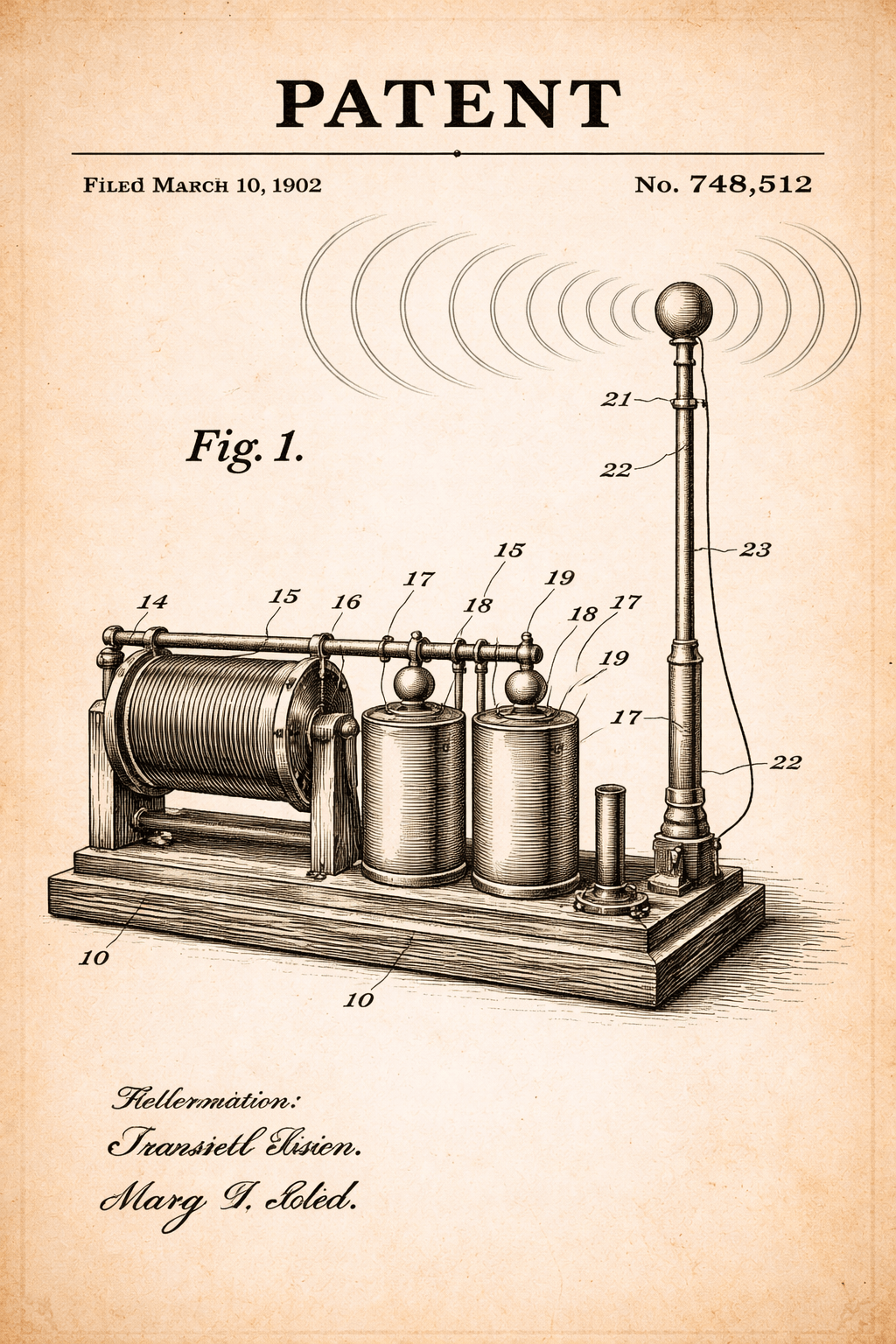
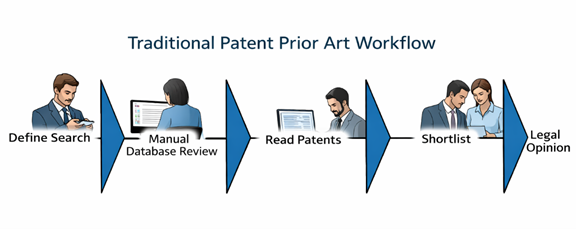
Patent prior art search is an essential step in the innovation lifecycle. Before investing heavily in product development or filing a patent application, companies ought to understand whether similar inventions or technical solutions have already been disclosed in earlier patents. Traditionally, this process has been manual, time‑consuming, and heavily dependent on the experience of patent attorneys and professional search firms. This article explores how an AI‑driven workflow built using n8n can be use to perform structured and scalable patent prior art searches. The focus is not only on claim interpretation (when the prior art search is against existing or prospective new claims), but more importantly on identifying technical features disclosed across patent specifications and drawings. |
ℹ Why Features Matter More Than Keywords Traditional prior art searches rely heavily on keyword matching, which often misses relevant patents that describe the same concept differently. In an AI-driven workflow, the focus shifts to technical feature extraction and mapping - identifying what the invention actually does, not just how it is described. This allows the system to uncover semantically similar disclosures across patents, even when different terminology is used, significantly improving search depth and accuracy.
Business Scenario: Smart Home IoT Hub Innovation
Consider a smart home technology company developing a next‑generation IoT hub designed to orchestrate multiple connected devices. The hub includes features such as multi‑protocol wireless connectivity (Wi‑Fi, Zigbee, Bluetooth), edge‑AI automation rules, voice assistant integration, device prioritization, and secure Over‑the‑Air firmware updates.
Companies can conduct prior art searches either by leveraging internal AI-powered patent search tools (such as PQAI, Perplexity or other similar platforms) or by engaging an external law firm or specialized patent search provider. Modern AI tools enhance this process by extracting technical features, expanding search queries semantically, and identifying relevant disclosures across large patent datasets more efficiently than traditional keyword-based methods.
The objective is to determine whether similar technical features have already been disclosed in earlier patents, thereby enabling organizations to assess patentability risk, refine their innovation and filing strategy, and uncover potential design-around opportunities.

AI‑Driven Prior Art Search Workflow Using n8n
Step 1: Feature Extraction
AI models extract structured technical features from product specifications, engineering notes, invention disclosures, and system architecture documents. These structured features form the foundation of large‑scale patent search queries.

Illustration of feature extraction from product document using AI
Step 2: Query and Retrieval
The n8n workflow integrates with patent intelligence sources such as PQAI, SerpAPI, and enterprise patent datasets stored in BigQuery. The workflow retrieves patents across jurisdictions, classifications, and technology domains to ensure comprehensive coverage.

Various patent data sources can be leveraged to retrieve documents that align with the defined feature filters.
Step 3: Iterative Filtering
AI progressively filters results by analyzing semantic similarity, CPC/IPC classification overlap, and contextual relevance to target features. This iterative loop reduces noise while maintaining discovery breadth.
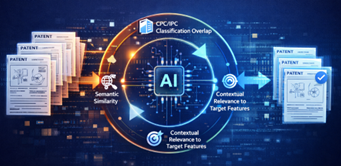
Patent results are filtered to generate a high-quality, relevant shortlist for further analysis
Step 4: Feature Disclosure Analysis
Instead of focusing purely on patent/claim language, AI evaluates whether patents disclose similar technical features, system behaviours, or architectural patterns within specifications, embodiments, and diagrams. Evidence snippets are extracted and scored for relevance.

AI evaluates patent documents by mapping technical features to disclosed elements, including both textual and visual
Step 5: Human‑in‑the‑Loop Legal and Technical Review
Patent attorneys and engineering teams review AI‑generated shortlists, validate feature mappings, interpret disclosure depth, and develop patent filing or innovation strategy recommendations.
ℹ AI + Human = Stronger Patent Strategy While AI speeds up patent discovery and analysis, it does not replace expert judgment. The best workflows combine AI-driven filtering with review by patent attorneys and engineers, ensuring results are both relevant and legally meaningful for stronger patent decisions.
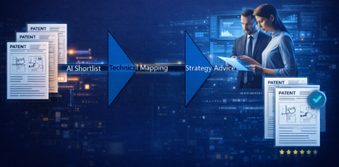
Patent attorneys review and validate AI-generated results.
n8n Sample Workflow
This n8n workflow automates prior art search using AI. It extracts key features from inputs, expands search queries, and retrieves results from multiple patent sources. An iterative filtering step refines results based on semantic similarity and relevance, followed by feature-level analysis to identify true disclosures.
Results are structured into sheets for attorney review and final validation, enabling faster, more accurate decisions on patentability, strategy, and design-around opportunities.

sample n8n workflow for prior art search
Benefits of the Automated Prior Art Workflow
• Faster patentability risk assessment
• Deeper insight into disclosed technical solutions
• Scalable analysis across global patent datasets
• Stronger collaboration between legal and engineering teams
• Better innovation and R&D investment decisions
Conclusion
AI‑driven automation enables organizations to move from manual document review toward structured, evidence‑driven prior art discovery. By combining broad AI search with expert human judgment, companies can converge more quickly on meaningful prior disclosures and build stronger patent strategies in competitive technology markets.
About the Author and Firm
This analysis is provided by Kama Thuo, PLLC, an engineering & technology law firm focused on patents, AI, and wireless telecom law. Brian Kibet is a multidisciplinary professional combining expertise in wireless engineering, paralegal practice, and software development. With a background in AI and automation, he specializes in designing intelligent workflows for intellectual property processes, particularly in patent-related work. His focus is on leveraging AI to improve the speed, accuracy, and scalability of patent and trademark research, bridging the gap between technical innovation and legal strategy.
Whether you are an inventor seeking to license your technology or a company navigating an IP dispute, our firm has the technical and legal expertise to protect your interests. Reach out to us to see how we can assist you at www.kthlaw.com/patents, or explore our AI-powered legal services at https://www.kthlaw.com/ai.