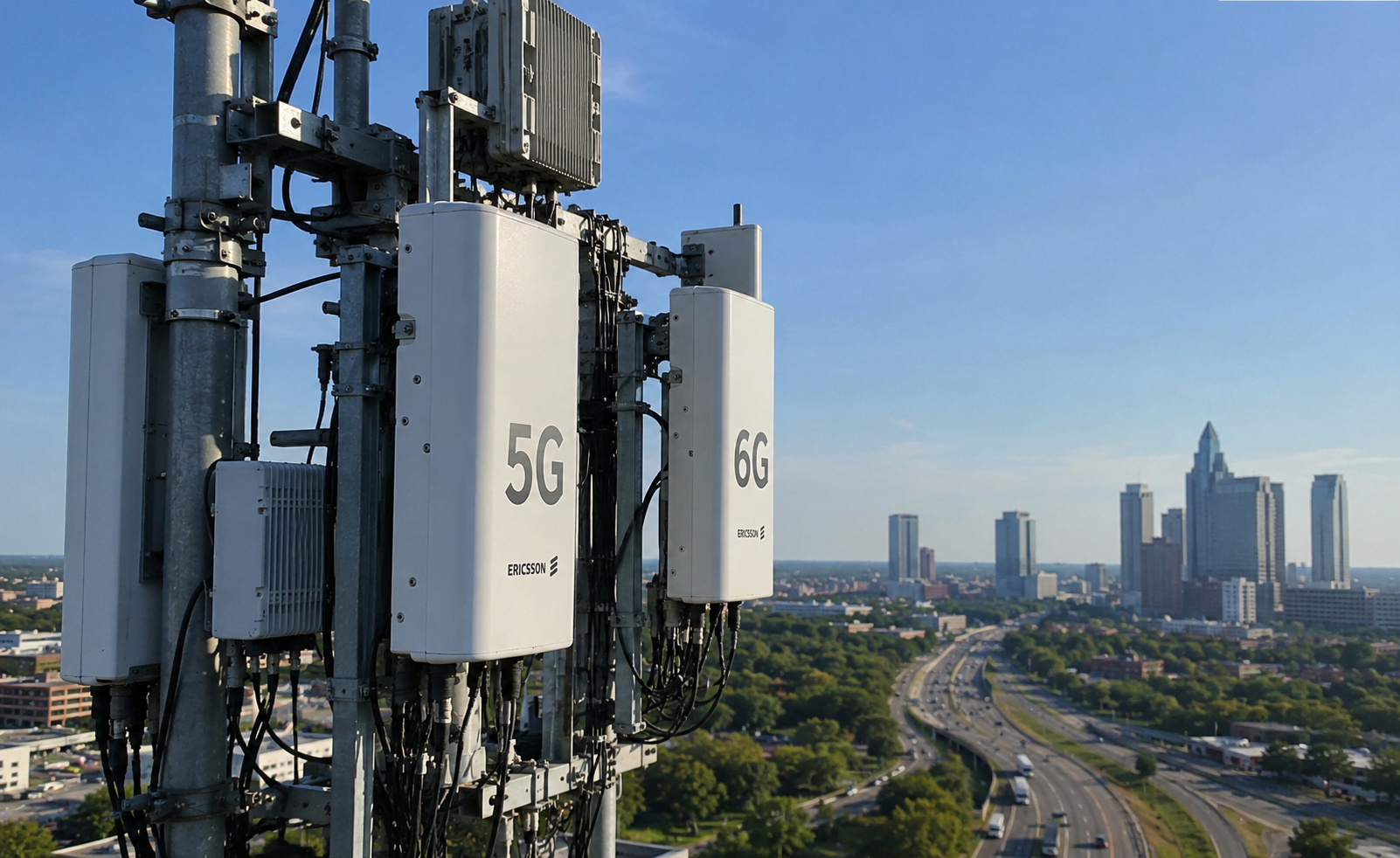
The restoration of auction authority, the launch of AWS-3 Auction 113 in 2026, and ongoing efforts to identify additional mid-band spectrum resources reflect a broader strategy to strengthen U.S. leadership in wireless communications. As demand for advanced 5G services continues to grow and planning for future 6G networks accelerates, policymakers are increasingly focused on ensuring that sufficient spectrum resources are available to support innovation, economic growth, and global competitiveness.
These developments build upon earlier spectrum initiatives, including the FCC’s 600 MHz Incentive Auction, while shifting attention toward the mid-band frequencies that are expected to play a central role in the next generation of wireless technologies.
The Legacy of the 600 MHz Auction
The FCC’s Incentive Auction, completed in 2017, was one of the most innovative spectrum auctions ever conducted. It repurposed broadcast television spectrum for mobile broadband use and made 70 MHz of low-band spectrum available for wireless services.
The auction helped expand LTE coverage nationwide and later became a cornerstone of low-band 5G deployments. Low-band spectrum around 600 MHz offers excellent propagation characteristics, enabling signals to travel long distances and penetrate buildings more effectively than higher-frequency bands.
As carriers deployed nationwide 5G networks, 600 MHz spectrum became particularly valuable for providing broad geographic coverage, especially in rural areas. However, while low-band spectrum excels at coverage, it cannot alone meet the growing demand for network capacity, ultra-low latency, and emerging AI-driven applications.
Why Mid-Band Spectrum Has Become the New Priority
Mid-band spectrum generally refers to frequencies between approximately 1 GHz and 7 GHz. These frequencies offer a balance between coverage and capacity, providing significantly greater throughput than low-band spectrum while maintaining practical coverage characteristics.
Federal policymakers have increasingly recognized that access to additional mid-band spectrum is necessary to maintain U.S. competitiveness in advanced wireless technologies. Congress, the FCC, and the National Telecommunications and Information Administration (NTIA) have all identified spectrum availability as a critical component of economic growth, national security, and technological leadership.
The demand for mid-band spectrum is expected to increase as wireless networks support increasingly data-intensive applications, including artificial intelligence, advanced manufacturing, autonomous systems, and next-generation communications platforms.
Restoration of FCC Spectrum Auction Authority
A major development occurred in 2025 when Congress restored the FCC’s spectrum auction authority after a period during which the agency lacked authority to conduct new auctions.
The legislation not only restored the FCC’s ability to auction spectrum licenses but also established a framework for identifying additional spectrum suitable for commercial wireless services. Congress directed federal agencies to evaluate spectrum resources and create a long-term pipeline of frequencies that could be made available for future wireless deployment.
The restoration of auction authority was widely viewed as a necessary step toward ensuring that the United States remains competitive in global wireless technology development. Spectrum auctions have historically played a significant role in expanding wireless infrastructure, promoting innovation, and supporting economic growth.
AWS-3 Auction 113 Marks the Return of Major Spectrum Auctions
The FCC’s AWS-3 Auction 113 represents one of the first significant spectrum auctions following the restoration of auction authority.
The auction involves Advanced Wireless Services (AWS) spectrum, which has long been recognized as valuable for commercial mobile broadband deployment. AWS spectrum supports a variety of wireless applications and is particularly useful for increasing network capacity in urban and suburban environments.
Auction 113 signals the beginning of a broader effort to expand spectrum availability for commercial wireless services. It also demonstrates the federal government’s renewed commitment to creating a predictable spectrum pipeline that allows carriers and investors to make long-term infrastructure decisions.
As wireless traffic continues to increase, additional AWS spectrum can help alleviate network congestion while supporting the continued expansion of 5G services nationwide.
Preparing for the Transition to 6G
Although commercial 6G deployment remains several years away, spectrum planning for 6G has already begun.
Researchers, standards organizations, federal agencies, and industry stakeholders are evaluating the spectrum resources that may be required to support future applications. Potential use cases include advanced artificial intelligence systems, digital twins, immersive communications, connected robotics, autonomous transportation systems, and large-scale industrial automation.
Future 6G networks are expected to demand greater flexibility, lower latency, higher reliability, and substantially increased capacity compared to current wireless systems. Achieving these goals will likely require access to additional mid-band spectrum and potentially higher-frequency resources beyond those currently used for commercial wireless services.
The spectrum decisions being made today will directly influence how effectively the United States can deploy and compete in future 6G ecosystems.
About the Author and Firm
This article is provided by Kama Thuo, PLLC, an engineering and technology law firm focused on wireless telecommunications, artificial intelligence, intellectual property, and emerging technology regulation. Brian Kibet is a multidisciplinary professional with experience spanning wireless engineering, legal research, and software development. His work focuses on the intersection of telecommunications, technology policy, and AI-driven automation, helping organizations navigate complex technical and regulatory challenges. Drawing on expertise in wireless systems, spectrum management, and advanced technologies, he analyzes developments shaping the future of connectivity, including 5G, 6G, satellite communications, and next-generation network infrastructure.
Learn more about regulatory insights and technical spectrum analyses here: Spectrum Licensing Practices or Contact us for more information.