The U.S. Department of the Air Force has licensed a patented drone-capture technology to Rocket One Inc. under a 12-month evaluation agreement announced on October 6, 2026.
The agreement covers U.S. Patent No. 10,239,637, titled “System and Method for Arresting and Neutralizing Unmanned Vehicles”. Granted in March 2019, the patent describes a system designed to physically capture unmanned vehicles while isolating their wireless communications.
Rocket One intends to evaluate the technology for potential defense and security applications, including possible integration with its Swarm Stage AI counter-unmanned aircraft systems (counter-UAS) initiatives.
The Backstory: Why the Air Force Developed the Technology
The invention emerged during a period of growing concern over the security risks posed by inexpensive commercial drones.
In January 2015, a small quadcopter crashed on the White House grounds, exposing challenges associated with protecting sensitive facilities from unauthorized unmanned aircraft.
Later that year, the Department of Defense conducted its Black Dart 2015 demonstration at Naval Base Ventura County, California. The exercise evaluated counter-drone technologies and highlighted the difficulty of detecting small UAVs using conventional radar systems.
Against this broader security backdrop, Air Force inventors Jonathan Ashdown, Paul Sikora, and Brendon Poland developed an approach addressing a limitation of existing drone-capture technologies: physically trapping a drone did not necessarily prevent its operator from transmitting commands or activating a hazardous payload.
Their invention, which claims priority to March 3, 2016, proposed combining physical containment with radio-frequency isolation to reduce these risks without necessarily destroying the target.
Although these events illustrate the environment in which the invention emerged, there is no established evidence that the White House incident or Black Dart exercise directly inspired the inventors.
How the Patented Drone-Capture System Works
The patent describes a friendly unmanned aerial vehicle (UAV) deploying a specialized containment structure around a potentially hostile drone.
The enclosure incorporates conductive shielding material intended to attenuate radio-frequency signals, functioning similarly to a Faraday cage. By limiting signals entering or leaving the enclosure, the system could disrupt communications between the captured drone and its operator.
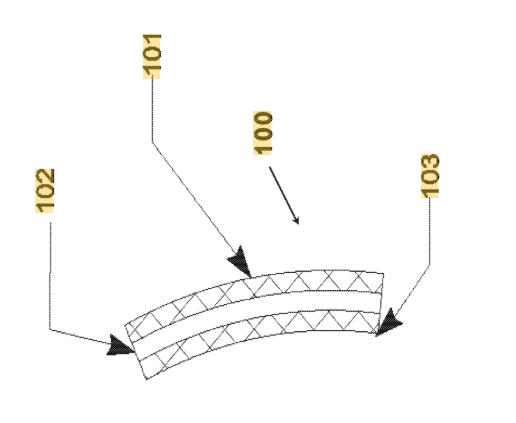
Patent drawing FIG. 1: Cross-section of the patented RF isolation material, showing conductive shielding and supporting layers.
The conductive shielding works on principles associated with a Faraday enclosure, attenuating electromagnetic signals that would otherwise reach equipment inside. In a drone-interception scenario, this could reduce the effectiveness of external radio-control commands and wireless positioning signals.
The patent describes two principal containment configurations: a deployable net-like enclosure and a substantially rigid cage. In either configuration, the friendly drone approaches the target and deploys the containment structure around it.
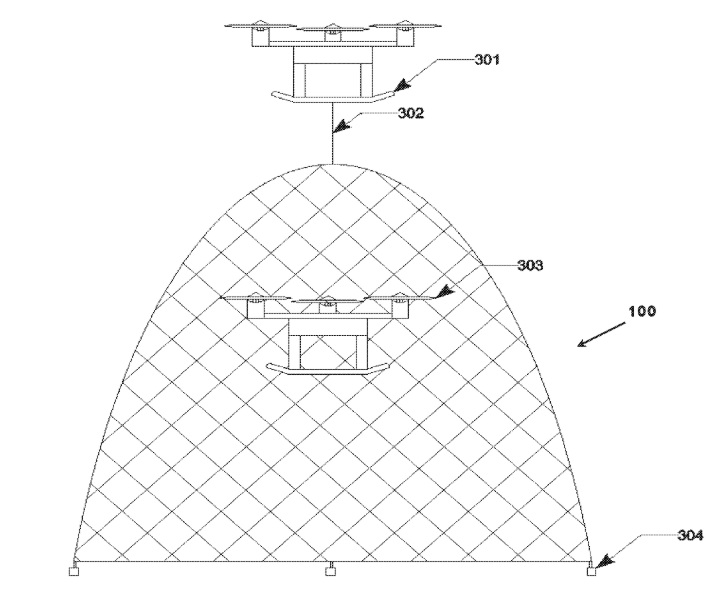
Patent drawing FIG. 3
An especially significant aspect involves electronic countermeasures. As illustrated in Figure 2 of the ’637 patent, the system incorporates an external antenna (201) and an internal antenna (203) positioned on opposite sides of the RF-shielding material. These antennas could support signal interception, controlled communications, or localized spoofing and jamming within the shielded environment. (see more on antenna insights)
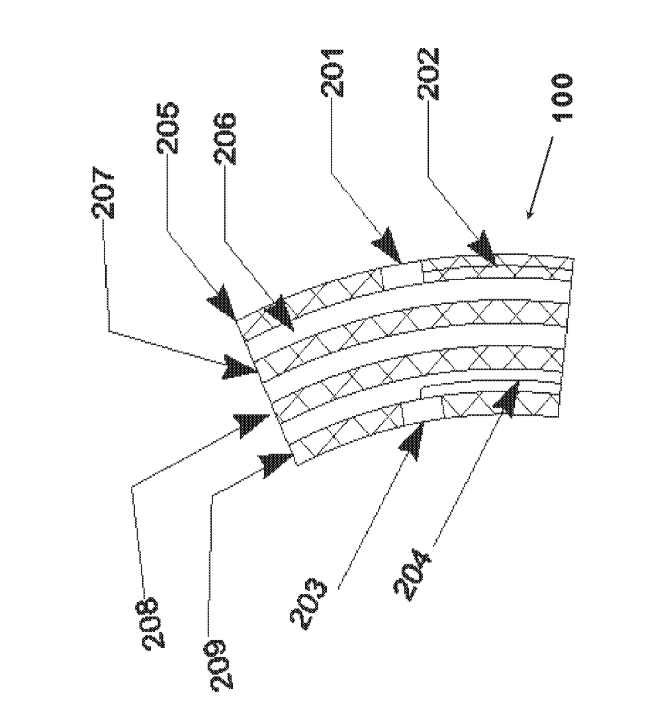
Patent drawing FIG. 2: Cross-sectional view of the RF-isolating containment structure, showing internal and external antennas and their associated signal cables.
Related Patents: How Counter-Drone Capture Technology Has Evolved
The Air Force invention forms part of a broader body of patent activity involving drone interception, electromagnetic protection, and electronic countermeasures.
Three other patents illustrate how this technology has developed:
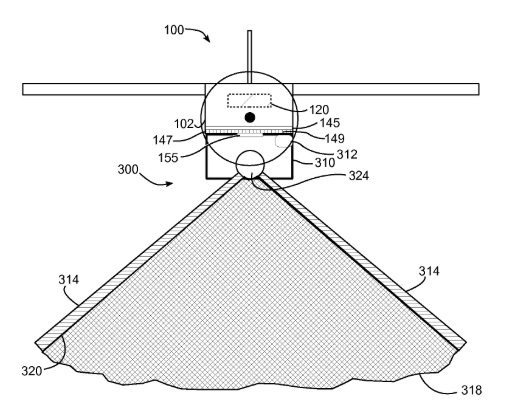 |
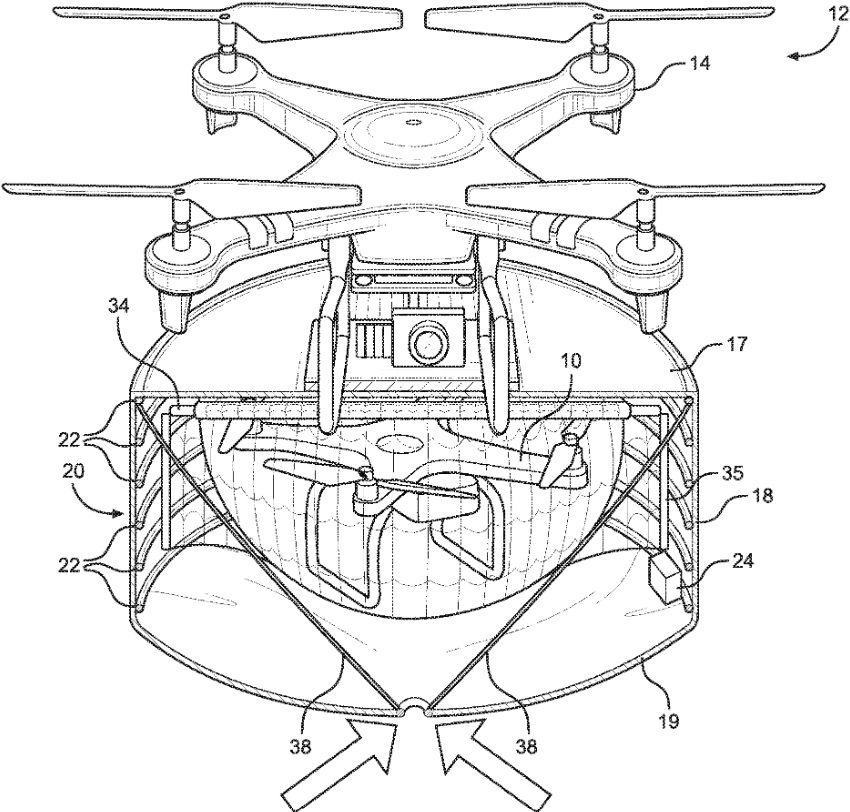
Granted in 2015 and assigned to Lockheed Martin, this patent describes an aerial platform equipped with a deployable net for capturing another UAV. It is specifically discussed in the Air Force patent's background as earlier capture technology that did not address RF isolation in the same way. |
 |
U.S. Patent No. 11,054,224 - System for Physically Capturing and Signal-Defeating Unmanned Aerial Vehicles This later patent describes a capture system incorporating a conductive signal-blocking enclosure and an additional capture device. It is especially relevant because it also combines physical interception with RF shielding, although its particular claimed arrangement differs from the Air Force patent. |
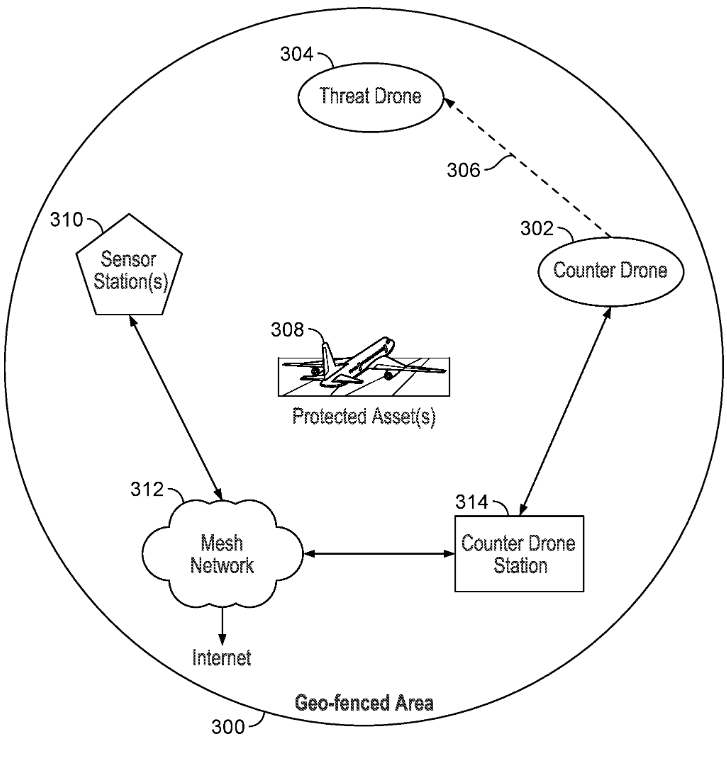 |
U.S. Patent Application Publication No. 2024/0142996 - Counter Drone System This published application addresses networked detection, sensor-data fusion, identification of potential drone threats, and instructions to counter-drone systems. It illustrates a complementary layer of technology that could inform decisions about when and how an interception system should be deployed. |
These patents illustrate the evolution of counter-drone systems from mechanical interception toward integrated physical and electronic neutralization. They are technologically related, although they do not necessarily share ownership or licensing rights.
What the License Could Mean for AI-Enabled Counter-Drone Systems
Rocket One plans to evaluate whether the patented technology could complement its Swarm Stage AI platform, which focuses on drone-swarm threat simulation and counter-UAS training.
Potential applications could combine AI-assisted detection, target tracking, and interception planning with physical capture and RF isolation. However, the licensed patent itself does not primarily claim AI technology, and these integrations remain prospective rather than demonstrated.
The agreement grants evaluation rights only, not commercial sales authorization. Further testing, licensing, and regulatory approvals would be required before commercialization.
Conclusion
U.S. Patent No. 10,239,637 illustrates an approach to counter-drone technology that brings together mechanical interception, electromagnetic shielding, and electronic countermeasures.
Its licensing to Rocket One highlights how government-developed intellectual property may contribute to emerging AI-enabled defense applications, particularly as unmanned systems become increasingly sophisticated.
About Kama Thuo, PLLC
This analysis is provided by Kama Thuo, PLLC, an engineering & technology law firm focused on patents, AI, and wireless telecom law. Brian Kibet is a multidisciplinary professional with expertise in wireless engineering, paralegal practice, and software development. With a strong background in AI and automation, he designs intelligent workflows for intellectual property processes, with a focus on patent-related work, bridging the gap between technical innovation and legal strategy.
Whether you are an inventor seeking to license your technology or a company navigating an IP dispute, our firm has the technical and legal expertise to protect your interests. Reach out to us to see how we can assist you at www.kthlaw.com/patents, or explore our AI-powered legal services at https://www.kthlaw.com/ai.